
Walk into two thrift stores on the same street and they can look identical: racks of shirts, a shelf of coffee mugs, a bin of puzzles. But where the money goes when you check out can be completely different. One store might be a business with owners and shareholders. The other might be a nonprofit putting its profit back into the community.
Here’s how a nonprofit thrift store works, what makes it different, and how one small store in Farmington, Arkansas uses the model to fund local entrepreneurs.
Thrift store, resale shop, consignment: what’s the difference?
A for-profit thrift or resale shop buys or collects used goods and sells them for a profit that goes to the owners. Many are good businesses and good neighbors; the profit just stays private.
A consignment shop sells your items for you and splits the sale price with you.
A nonprofit thrift store is owned by a 501(c)(3) organization. Goods are donated, not purchased. Sales cover the store’s costs, and whatever is left funds the organization’s mission. Because the parent is a registered nonprofit, donations of goods are generally tax deductible for the donor.
Within nonprofit thrift stores there’s still a range. Some fund a national charity’s programs. Some run job-training programs through the store itself. Some, like UpStart Thrift, exist to fund one specific local purpose.
How a nonprofit thrift store works, step by step
UpStart Thrift opened in June 2022 as a project of Startup Junkie Foundation, a Fayetteville-based 501(c)(3) that supports entrepreneurs and small business owners across Northwest Arkansas. Here is the full loop, using UpStart as the example:
Step 1: Neighbors donate. Community members drop off clean, gently used clothing, handbags, jewelry, toys, linens, home goods and small furniture, either during store hours at 235 E. Main Street or in the secure 24-hour bin behind the store. Startup costs for the store were covered by anonymous donors from the Fayetteville and Farmington communities, so from day one the inventory and the operation have both been community-funded.
Step 2: Volunteers do the work. UpStart has no paid store staff. Volunteers sort, hang, price, display and sell everything. Since 2022 they’ve contributed more than 20,000 hours. That’s the single biggest reason the model works: without payroll, the store’s costs are essentially rent and utilities.
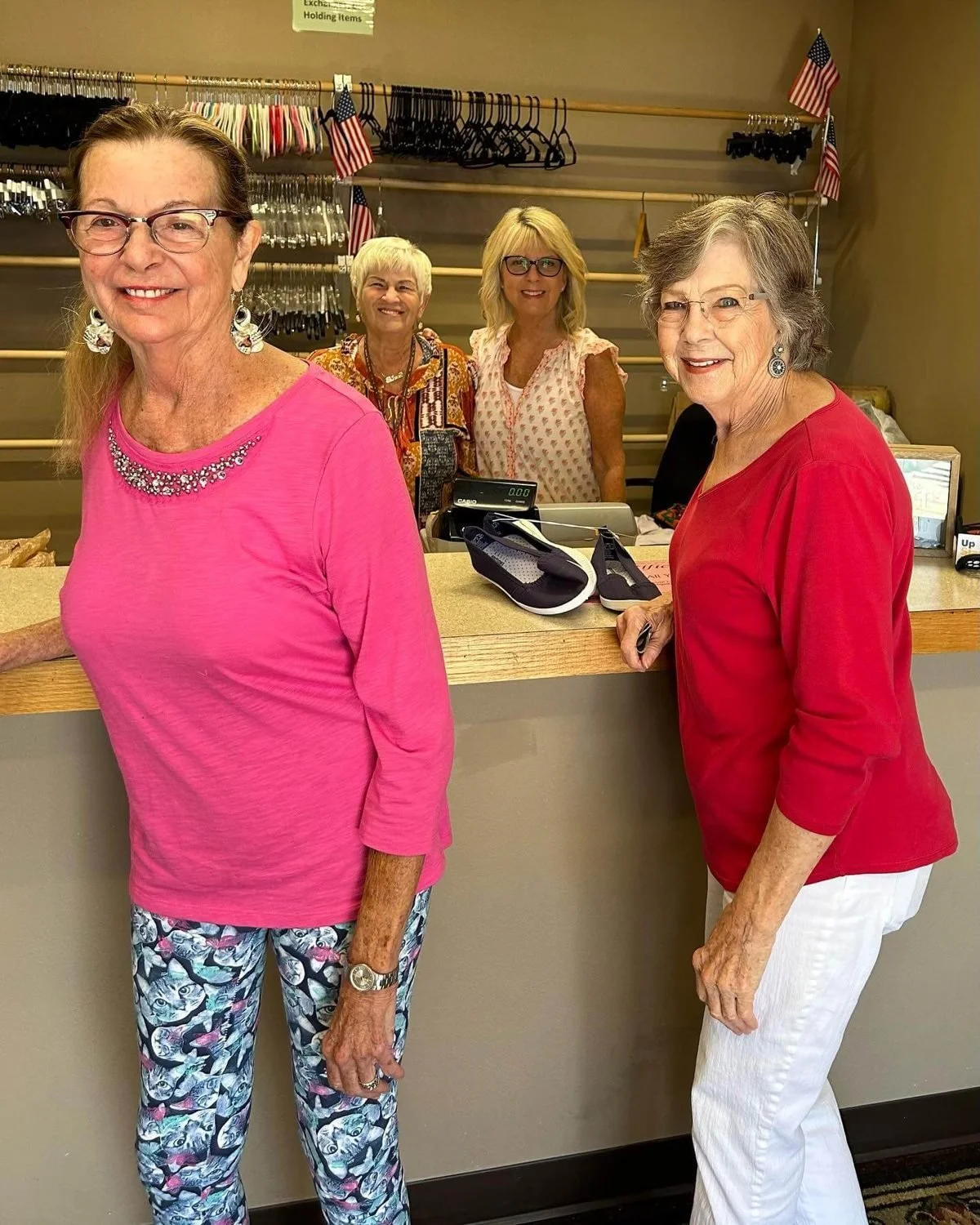
UpStart Thrift has no paid store staff. Volunteers sort, price, display and sell everything.
Step 3: Shoppers buy at low prices. Items are priced to sell for what they’re worth, which keeps affordable clothing and household goods available to families in the area. In September 2026 the store expanded to 4,928 square feet to make room for more of both.
Step 4: Profit goes to the mission. After rent and utilities, 100% of UpStart’s profit funds two things for Washington County entrepreneurs:
UpStart small business grants: needs-based grants starting at $500 for equipment, inventory, licenses, marketing assets, or product development (not debt). Because the fund grows only as fast as store sales do, awards are limited; recipients are selected by the UpStart team with Startup Junkie Foundation leadership.
Kiva NWA loans: 0% interest, crowdfunded loans for small businesses, administered by Startup Junkie Foundation.
Step 5: Businesses grow, and the loop repeats. Since it began issuing grants, UpStart has supported more than 35 Washington County small businesses and deployed more than $50,000. Many of those owners are also UpStart shoppers and donors, which is the whole idea.
What a grant actually buys
Grants from a thrift store are small by design, and that’s the point. A few hundred or a few thousand dollars at the right moment can clear a barrier a bank loan never would. Some real examples from UpStart’s recipients:
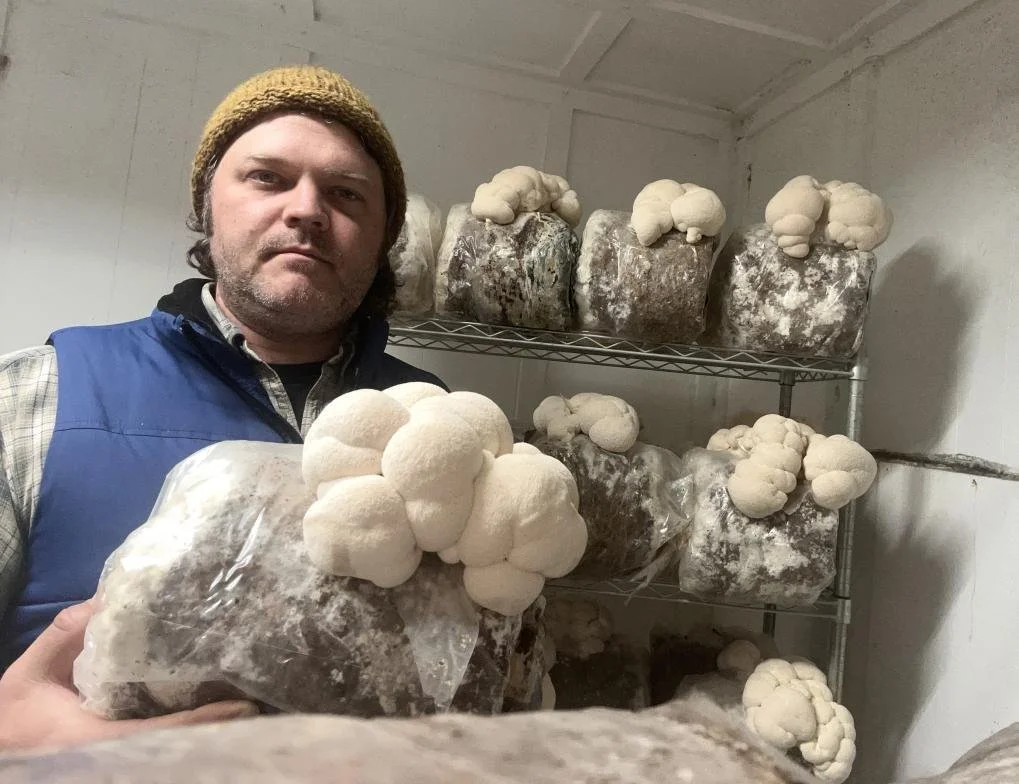
Zach Taylor of Fat Top Farm used a $3,000 UpStart grant for geothermal improvements to his mushroom fruiting rooms.
Fat Top Farm (Zach Taylor) used a $3,000 grant for geothermal improvements to the rooms where his mushrooms fruit. “I expect to pay 40% of what I used to pay for heating and cooling my fruiting rooms,” he said.
Fine Art of Massage (Diana Michelle) used a $2,000 grant to replace the carpet in her studio.
Pedal Pops / Pedal Park in Farmington used a grant for signage and updated packaging.
My-T-By-Design used a grant for repairs and expansion after relocating to Fayetteville following tornado damage in Rogers.
Magnolia Coffee House used a grant to repair or replace refrigeration equipment.
You can read more about the 2024 awards in our grant announcement and see every recipient at upstart-impact.org.
Where unsold donations go
A nonprofit thrift store also tends to be a quiet hub for other community needs. Donated goods that fit a better purpose than the sales floor have gone from UpStart to clothing closets in Prairie Grove and Farmington schools, to Family Network and the Diaper Collective, to mothers at the Salvation Army shelter, to libraries and assisted living residents, to Pedal It Forward (children’s bikes), and to the Farmington Senior Center. Families recovering from house fires have been outfitted from the racks.
How to tell if a thrift store is a nonprofit
If it matters to you where your money and donations go, a few quick checks:
Look for the parent organization. A nonprofit store will name its 501(c)(3) on the website, the sign, or the receipt. UpStart’s is Startup Junkie Foundation.
Ask what the profit funds. A clear answer is a good sign. UpStart’s is one sentence: after rent and utilities, 100% goes to Washington County small business grants and Kiva loans.
Ask for a donation receipt. Nonprofits can provide one for donated goods; for-profit shops generally can’t.
Three ways to be part of the loop
Shop. UpStart is open Monday, Wednesday, Friday and Saturday from 9 AM to 1 PM at 235 E. Main Street, Farmington.
Donate. Drop off during hours or use the 24-hour bin. Details on our Donate page.
Learn about the grants. Grants are small, needs-based and limited to early-stage and growing businesses in Washington County, Arkansas. The Grants page explains who’s eligible and how recipients are chosen.
A nonprofit thrift store is a simple machine: donated goods in, affordable prices on the floor, and profit out to a mission. At UpStart, the mission happens to be the shop down the street from you.